

Background
In May of 2023, the Hanson Lake #3 Improvement Association, Inc. hired Houston Engineering, Inc. (HEI) to perform a lake assessment on Hanson Lake. For this assessment, we were tasked with collecting and analyzing sediment samples at the bottom of the lake as well as evaluating the potential feasibility and cost of strategies to reduce phosphorus being released into the lake.
The Project
HEI collected two sediment samples from the bottom of Hanson Lake at three different locations. One sample was used to analyze the potential rate at which the sediment releases phosphorus, which determines the need for phosphorus inactivation.
The other was used to quantify the various forms of phosphorus present, which is called fractionization. This determines if alum application is appropriate and helps quantify the required alum dosing rates and costs.
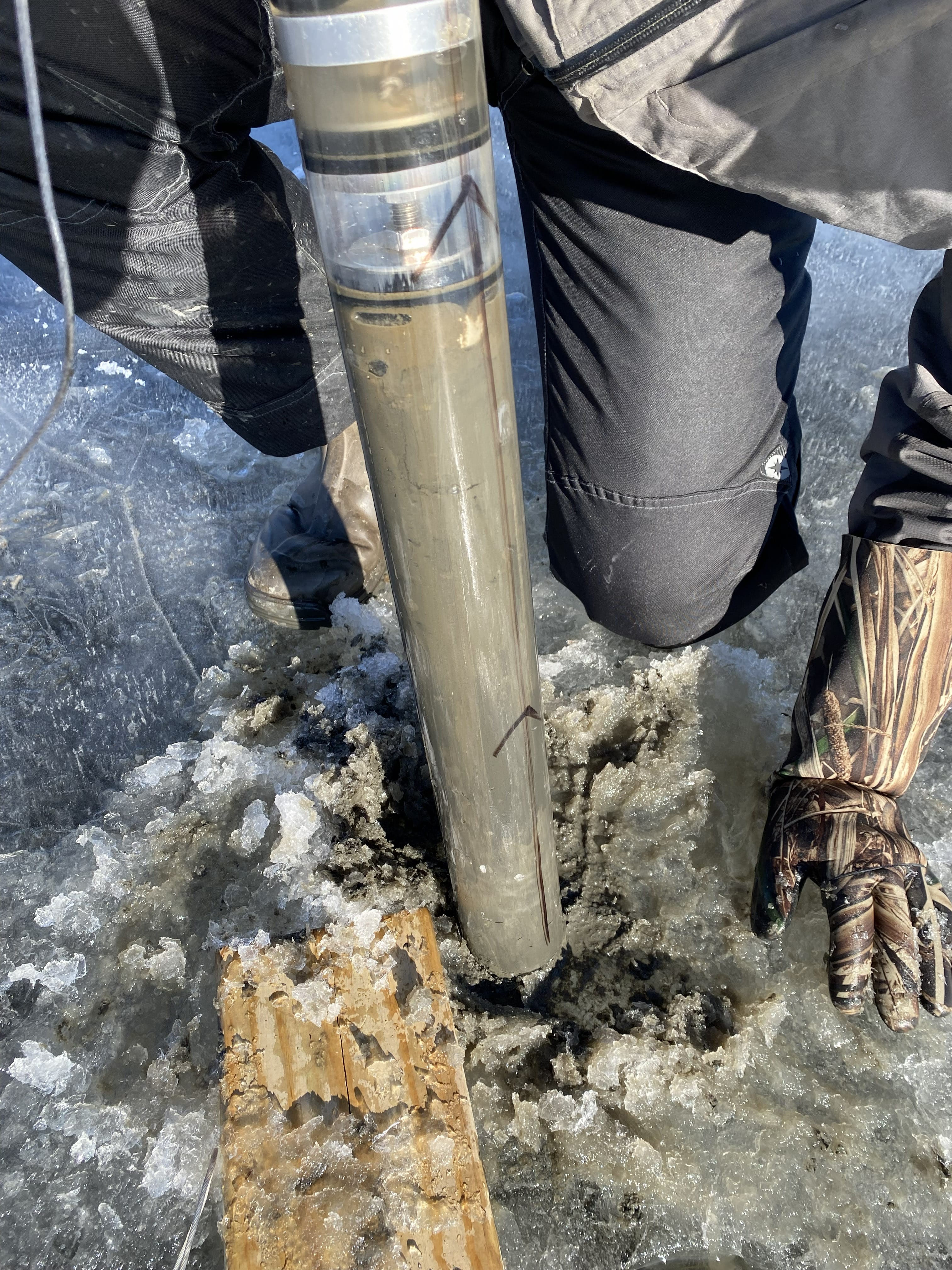
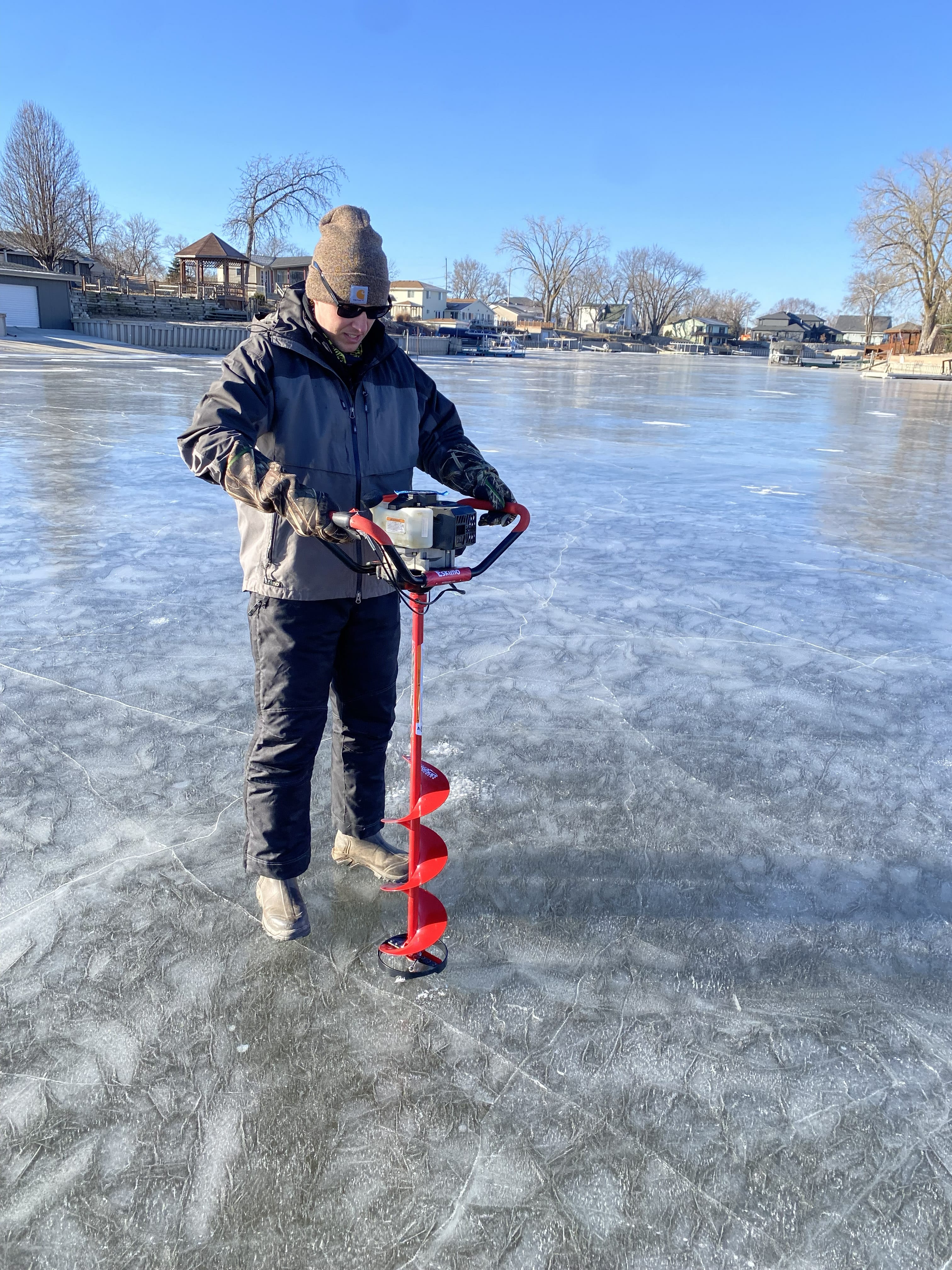
Our team collected the sediment samples through the ice using an ice auger. We then lowered a piston sampler to the bottom of the lake to pull up intact sediment cores. Our team placed the cores and sent them to the Center for Limnological Research and Rehabilitation at the University of Wisconsin-Stout (UW-Stout) for analysis.
UW-Stout received the sediment samples in good condition and analyzed them for phosphorus release and fractionization. Upon obtaining the results, HEI calculated the phosphorus released and required alum dosing rates, expected treatment longevity, and planning‑level cost estimates to limit phosphorus release and resulting eutrophication.
Our team compiled a technical document that summarizes the analysis, calculations for phosphorus release and alum dosing, the cost of alum dosing, and whether this is a feasible solution for improving water quality at Hanson Lake.